Originally posted on July 19, 2023 @ 2:49 am
Last Updated on 4 months by admin
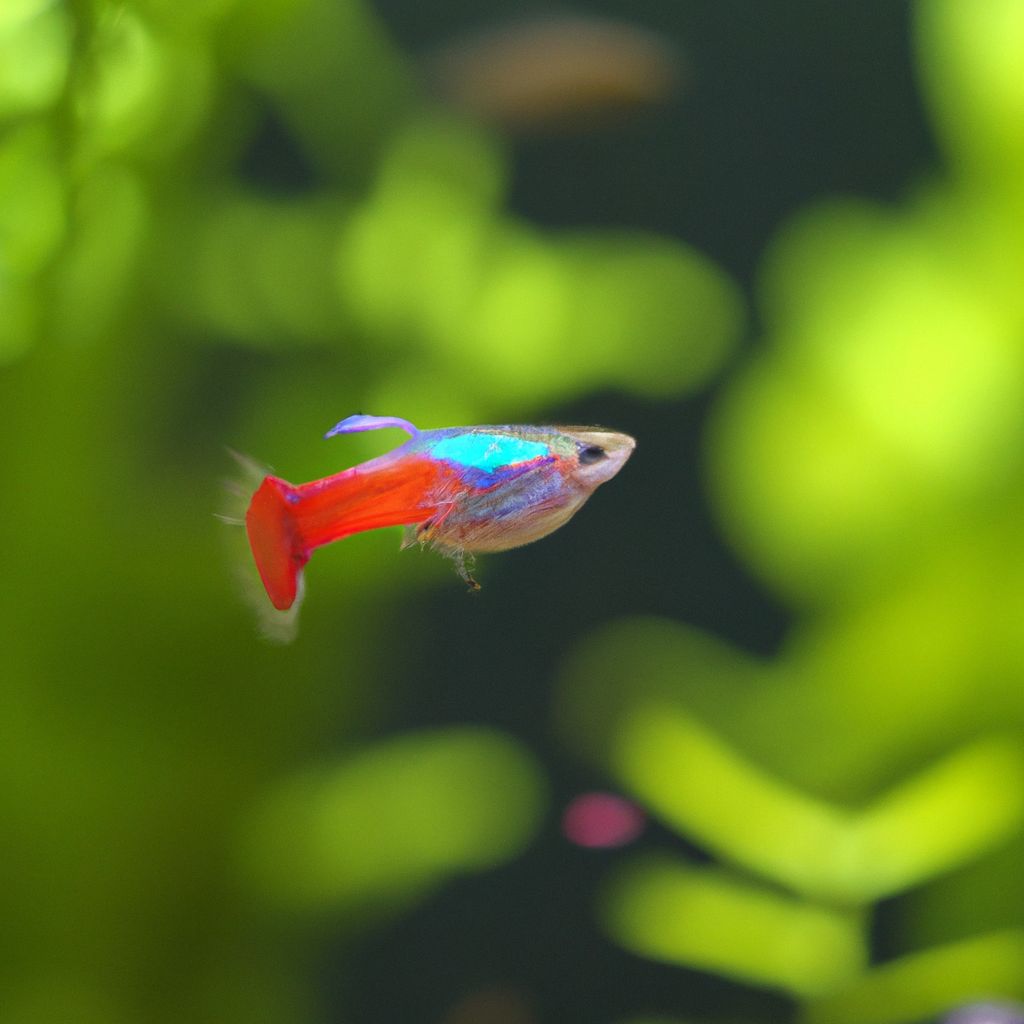
Neon Tetra and Guppies are two popular fish species that are often found in community aquariums. However, when considering their coexistence, it is important to understand their diet and compatibility. In this article, we will explore the relationship between Neon Tetra and Guppies in terms of their diet and cohabitation.
Understanding Neon Tetra and Guppies:
Neon Tetra: Neon Tetras are small, colorful freshwater fish known for their vibrant blue and red stripes. They are peaceful, schooling fish that prefer to live in groups.
Guppies: Guppies are also small, colorful fish that come in a variety of vibrant hues. They are known for their lively nature and adaptability.
Neon Tetra’s Diet: Neon Tetras primarily feed on small insects, crustaceans, and plant matter in their natural habitat. Their diet consists mainly of small invertebrates and organic particles found in their environment.
Can Neon Tetra Eat Guppy Fry?
Neon Tetras are generally not aggressive towards other fish, including guppy fry. However, there have been instances where Neon Tetras have been observed eating guppy fry, particularly if they are very small or weak. It is important to consider the size and number of Neon Tetras in the tank, as well as the availability of hiding places for the guppy fry to reduce the chances of predation.
Considerations for Neon Tetra and Guppy Coexistence:
1. Tank Size and Space: Providing an adequately sized tank with plenty of hiding spots and plants can help ensure a peaceful coexistence between Neon Tetras and Guppies.
2. Feeding and Food Competition: It is important to provide enough food for both Neon Tetras and Guppies to reduce the chances of competition and potential aggression.
3. Compatibility and Behavior: Observing the behavior of both fish species is crucial. Generally, Neon Tetras and Guppies are compatible, but individual personalities can vary, so it is essential to monitor their interactions closely.
Providing Adequate Nutrition for Neon Tetra and Guppies:
1. Suitable Tankmates for Neon Tetra and Guppies: Adding compatible tankmates that do not pose a threat to guppy fry or Neon Tetras can provide variety in the tank and reduce potential aggression.
2. Supplementing Diet for Neon Tetra: To ensure proper nutrition, it is recommended to supplement the Neon Tetra’s diet with high-quality flake food, small live or frozen invertebrates, and vegetable matter.
By understanding the diet and considering the necessary factors for coexistence, you can create a harmonious environment for both Neon Tetra and Guppies in your aquarium.
Key takeaway:
- Understanding Neon Tetra and Guppies: Neon Tetra and guppies are two popular fish species often found in aquariums.
- Neon Tetra’s Diet: Neon Tetras have a natural diet that primarily consists of small insects and worms.
- Can Neon Tetra Eat Guppy Fry?: Neon Tetras may eat guppy fry if they are small enough to fit in the mouth of the Tetra.
- Considerations for Neon Tetra and Guppy Coexistence: When keeping Neon Tetra and guppies together, it’s important to consider tank size, feeding habits, and compatibility.
- Providing Adequate Nutrition for Neon Tetra and Guppies: Neon Tetras and guppies require a balanced diet, and it may be necessary to supplement their diets with suitable tankmates and additional food.
Understanding Neon Tetra and Guppies
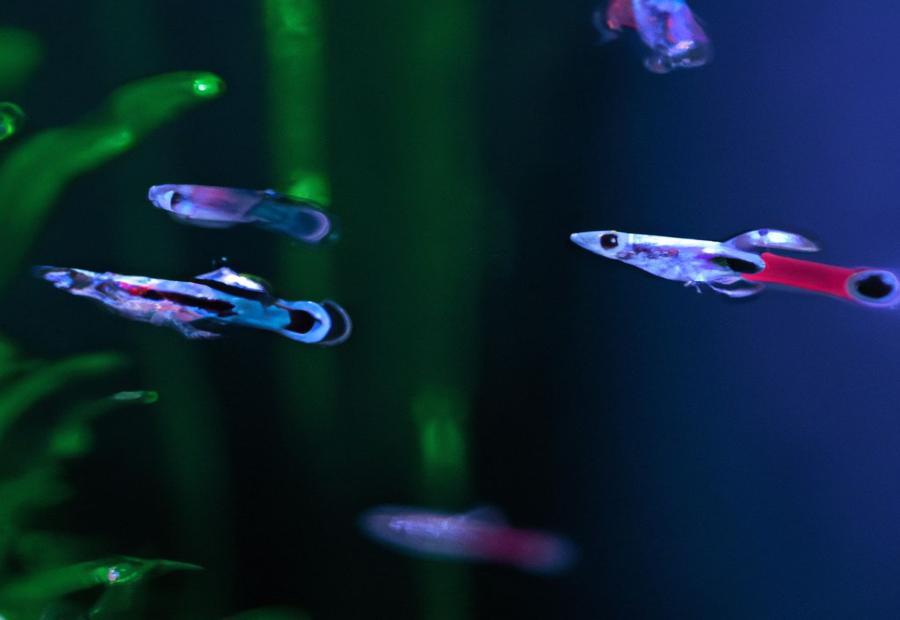
Photo Credits: Bettafishworld.Com by Alan Sanchez
Neon Tetras and Guppies – let’s dive into the fascinating world of these two vibrant fish! Discover the unique qualities and characteristics of Neon Tetras and Guppies, and explore how they coexist in aquariums. From the dazzling colors of Neon Tetras to the playful nature of Guppies, we’ll unravel the mysteries of these popular aquatic pets. Get ready to embark on an adventure through the underwater realm of Neon Tetras and Guppies!
Overview of Neon Tetra
The overview of Neon Tetra includes its appearance, natural habitat, and behavior.
- Appearance: Neon Tetras are small, brightly colored fish with a vibrant blue stripe running horizontally across their body. They also have a red stripe below the blue one, which starts from their tail and extends to their head.
- Natural Habitat: Neon Tetras are native to the blackwater streams and tributaries of South America, particularly in the Amazon basin. These streams are usually shaded by dense vegetation and have acidic water conditions.
- Behavior: Neon Tetras are known for their peaceful and social nature. They are schooling fish, which means they prefer to swim in groups. In their natural habitat, they often gather near the water’s surface, among the floating plants and tangled roots.
Fun fact: The striking colors of Neon Tetras are not present in their natural habitat. These vibrant hues develop through a process called “neon tetra disease” in captivity, where their color pigments become more pronounced due to the absence of predators and a controlled environment.
Overview of Guppies
Here is an overview of guppies:
| Guppies | |
| Scientific Name | Poecilia reticulata |
| Size | 2 to 2.5 inches |
| Lifespan | 1 to 3 years |
| Origin | South America |
| Colors | Wide range of vibrant colors and patterns |
| Temperament | Peaceful, social, and active |
| Diet | Omnivorous – eats both plant matter and small invertebrates |
| Tank Size | Minimum of 10 gallons |
| Water Conditions | Temperature: 72-82°F, pH: 6.8-7.8, Hardness: 8-12 dGH |
| Reproduction | Livebearer – gives birth to live young |
Guppies, scientifically known as Poecilia reticulata, are small freshwater fish native to South America. They are known for their vibrant colors and patterns, making them a popular choice among aquarium enthusiasts. Guppies typically reach a size of 2 to 2.5 inches and have a lifespan of 1 to 3 years.
These fish have a peaceful and social temperament, making them suitable for community tanks. They are active swimmers and enjoy exploring their surroundings. Guppies are omnivorous, meaning they eat both plant matter and small invertebrates. A balanced diet of high-quality fish flakes and occasional live or frozen foods is recommended.
When it comes to tank size, guppies require a minimum of 10 gallons of water. It is important to maintain proper water conditions with a temperature range of 72-82°F, a pH level of 6.8-7.8, and a hardness level of 8-12 dGH. Guppies are livebearers, which means they give birth to live young rather than laying eggs.
Remember, when introducing guppies to your aquarium, ensure compatibility with other tankmates and consider the space available. With proper care and a suitable tank environment, guppies can thrive and add beauty to your aquatic setup.
True story: I once had a tank full of guppies, and it was a mesmerizing sight to watch their vibrant colors and playful behavior. They would swim in synchronized patterns and always be eager to greet me at feeding time. The guppies brought life and joy to my aquarium, and I enjoyed observing their interactions with other fish species as well. Taking care of guppies taught me the importance of maintaining water quality and provided me with hours of relaxation and entertainment.
Neon Tetra’s Diet
When it comes to the diet of neon tetras, it’s important to provide them with a balanced and varied menu to ensure their health and well-being.
- Brine shrimp: Neon tetras enjoy consuming small live or frozen brine shrimp as part of their diet. These tiny crustaceans are rich in protein and a great source of nutrition.
- Micro pellets: You can supplement their diet with high-quality micro pellets specially formulated for small fish like neon tetras. These pellets are typically packed with essential nutrients and vitamins.
- Daphnia: One of the favorite foods of neon tetras is daphnia, a small water flea. These tiny organisms are packed with protein and are readily accepted by neon tetras.
- Mosquito larvae: In their natural habitat, neon tetras feed on mosquito larvae. Providing them with small amounts of live or frozen mosquito larvae can be a great addition to their diet.
Fact: Did you know that neon tetras are omnivorous, which means they can eat both meat and plant matter? This versatility allows them to have a varied diet that consists of both live and prepared foods.
When it comes to neon tetras’ diet, it’s essential to offer them a balanced and diverse range of food options. Incorporating small live or frozen brine shrimp into their meals provides them with rich protein and valuable nutrition. Additionally, high-quality micro pellets specifically designed for small fish like neon tetras can be included in their diet, ensuring they receive essential nutrients and vitamins. Another favorite food of neon tetras is daphnia, which is a protein-packed water flea readily accepted by these fish. To replicate their natural habitat, consider adding small amounts of live or frozen mosquito larvae to their diet. These additions contribute to their overall health and well-being. It’s interesting to note that neon tetras are omnivorous, enabling them to consume both meat and plant matter, making their diet versatile and comprehensive.
Natural Diet of Neon Tetra
The natural diet of Neon Tetra consists primarily of small invertebrates, plant matter, and microorganisms found in the wild.
- Small invertebrates: Neon Tetras feed on small insects, such as mosquito larvae, brine shrimp, and daphnia.
- Plant matter: They also consume plant matter, including algae and decaying plant material.
- Microorganisms: Neon Tetras rely on tiny microorganisms, such as infusoria and protozoa, for a significant portion of their diet.
Since Neon Tetras have small mouths, they require food that is small enough for them to consume easily. This means their natural diet consists of tiny organisms and particles.
It’s important to note that the natural diet of Neon Tetra can be replicated in captivity by providing a combination of live or frozen foods, such as brine shrimp and daphnia. Additionally, high-quality flake and pellet foods specifically formulated for tropical fish can also be included in their diet to ensure they receive a balanced nutrition.
Feeding Neon Tetras a varied diet that mimics their natural food sources is essential for their overall health and well-being. By providing them with the appropriate diet, you can help maintain their vibrant colors and promote their overall vitality.
Can Neon Tetra Eat Guppy Fry?
- Yes, neon tetras can eat guppy fry.
- Neon tetras are omnivorous and will eat a variety of foods, including small live or frozen prey such as guppy fry.
- Guppy fry are small enough to be considered suitable prey for neon tetras.
- However, it is important to note that neon tetras should only be given guppy fry as an occasional treat rather than a staple part of their diet.
- Feeding neon tetras a varied diet of high-quality fish flakes, freeze-dried foods, and live or frozen foods will ensure they receive all the necessary nutrients for their overall health and well-being.
Considerations for Neon Tetra and Guppy Coexistence

Photo Credits: Bettafishworld.Com by Jordan Flores
When it comes to the coexistence of neon tetras and guppies, there are several crucial factors to consider. From the size of the tank and available space to feeding habits and potential food competition, understanding the compatibility and behavior of these two species is key. In this section, we’ll explore these considerations in depth, providing insights and tips on how to create a harmonious environment for neon tetras and guppies in your aquarium. So let’s dive in and ensure a peaceful and thriving aquatic community!
Tank Size and Space
| Tank Size | Space Requirements |
| 10 gallons | A minimum tank size for a small community of neon tetras and guppies. It provides enough space for them to swim and interact comfortably. |
| 20 gallons | A recommended tank size for a larger group of neon tetras and guppies. It offers more swimming space and allows for a more natural behavior. |
| 30 gallons or more | Ideal for a larger community of neon tetras and guppies. It ensures ample space for each fish and allows for the addition of more tankmates. |
When considering the tank size and space for neon tetras and guppies, it is important to provide enough room for them to thrive. A smaller tank, such as a 10-gallon tank, can accommodate a small community of these fish, but it is essential to ensure they have enough space to swim and interact comfortably. A 20-gallon tank is recommended for a larger group, as it offers more swimming space and allows for a more natural behavior.
For those looking to house a larger community of neon tetras and guppies, a tank size of 30 gallons or more is ideal. This larger tank size ensures ample space for each fish, reducing the potential for stress and aggression. Additionally, a larger tank provides the opportunity to introduce more tankmates, creating a diverse and harmonious aquatic environment.
Feeding and Food Competition
When keeping Neon Tetra and Guppies together in a tank, it is essential to consider feeding and food competition. To gain a better understanding of their feeding behaviors, a table can be used:
| Feeding Aspect | Neon Tetra | Guppies |
|---|---|---|
| Feeding Habits | Neon Tetras are omnivorous and will consume both live and commercial food. They have a preference for small food particles and tend to feed in the mid to lower levels of the tank. | Guppies are also omnivorous and will eat both live and commercial food. They are active swimmers and feed on the water surface, consuming floating food. |
| Competition for Food | While Neon Tetras can engage in food competition, they are generally peaceful and do not aggressively compete with other tankmates. However, their small size and slower feeding style may make it challenging for them to compete with the faster-swimming Guppies. | Guppies are known for their higher feeding aggression compared to Neon Tetras. Their active swimming behavior and ability to quickly consume surface food can make it more difficult for Neon Tetras to access their food. |
| Food Preferences | Neon Tetras demonstrate a preference for small live or frozen foods such as brine shrimp and micro worms. They can also be fed high-quality flake or pellet food specifically designed for small tropical fish. | Guppies have a wider range of food preferences, consuming both live and commercial foods such as flakes, pellets, and even vegetable matter. They readily accept a variety of food options. |
Considering the feeding and food competition between Neon Tetra and Guppies, it is crucial to make sure that both species have access to their preferred food sources. Providing a diverse diet that includes sinking pellets for the Neon Tetras and surface food for the Guppies can help minimize competition and ensure that each species receives the necessary nutrition.
Compatibility and Behavior
The compatibility and behavior of neon tetra and guppies are crucial considerations when keeping them together in a tank. To better understand the dynamics between these two species, let’s examine their compatibility and behavior in a table:
| Compatibility | Behavior |
| Neon tetras and guppies are generally compatible and can coexist peacefully in a community tank. | Neon tetras are known for their peaceful nature and shoaling behavior. They prefer to swim in groups and feel more secure when surrounded by their own kind. Guppies, on the other hand, are lively and active fish that enjoy exploring all areas of the tank. |
| In terms of space, both neon tetras and guppies require ample room to swim freely. It is recommended to provide a tank size of at least 10 gallons to accommodate their needs. | When it comes to feeding, there may be some competition for food between neon tetras and guppies. Both species are omnivorous, but guppies have a tendency to eat more quickly and may leave less food for neon tetras. To ensure adequate nutrition for both species, it is essential to provide a varied diet and monitor their feeding habits. |
| Neon tetras and guppies exhibit compatible behavior, as long as there is enough space and food for all individuals. | It is important to note that individual temperaments and behavior can vary among neon tetras and guppies. Some may be more aggressive or territorial, which can disrupt the harmony in the tank. Close observation and monitoring of their interactions is necessary to ensure compatibility and well-being. |
By considering the compatibility and behavior of neon tetra and guppies, you can create a harmonious tank environment for both species.
Providing Adequate Nutrition for Neon Tetra and Guppies
Are you curious about how to ensure your neon tetra and guppies receive the nutrition they need for optimal health?
Delve into the world of providing adequate nutrition for these beautiful fish in this section. We’ll dive into suitable tankmates for neon tetra and guppies, and explore the importance of supplementing the diet for neon tetra.
Get ready to uncover the secrets to keeping your aquatic friends happy and well-fed!
Suitable Tankmates for Neon Tetra and Guppies
When considering suitable tankmates for Neon Tetra and Guppies, it is important to select species that have similar care requirements and compatible behaviors. Here are some options:
- Dwarf Gourami: Dwarf Gouramis are peaceful fish that can coexist well with Neon Tetra and Guppies. They add color and interest to the tank.
- Corydoras Catfish: Corydoras Catfish are bottom-dwelling fish that are compatible with Neon Tetra and Guppies. They help keep the tank clean by scavenging for food.
- Otocinclus Catfish: Otocinclus Catfish, also known as “Otos,” are small, peaceful fish that feed on algae. They can be a great addition to tanks with Neon Tetra and Guppies.
- Harlequin Rasbora: Harlequin Rasboras are peaceful schooling fish that can coexist well with Neon Tetra and Guppies. They add movement and color to the tank.
- Black Molly: Black Mollies are hardy fish that can tolerate a range of water conditions. They add variety to the tank and are compatible with Neon Tetra and Guppies.
It is important to introduce new tankmates slowly and monitor their behavior to ensure they are getting along with the Neon Tetra and Guppies. Avoid adding aggressive or fin-nipping fish to the tank to maintain a peaceful and harmonious environment.
Supplementing Diet for Neon Tetra
Supplementing the diet for neon tetras is crucial to ensure their optimal health and well-being. Here are some ways to provide adequate nutrition for neon tetras:
- Live or Frozen Foods: Neon tetras are carnivorous fish and they thrive on a diet that includes small live or frozen foods such as brine shrimp, bloodworms, and daphnia. These foods are rich in protein and essential nutrients.
- Specialized Tetra Diets: There are commercially available fish foods formulated specifically for neon tetras. Look for high-quality flakes or pellets that are designed for small tropical fish. These diets are often enriched with vitamins and minerals that are essential for their growth and development.
- Vegetable Matter: In addition to their protein-rich diet, neon tetras also benefit from consuming small amounts of vegetable matter. You can offer them blanched spinach or lettuce, as well as crushed algae wafers. This will provide them with additional fiber and nutrients.
- Feed Variety: It is important to offer a variety of foods to neon tetras to ensure they receive a balanced diet. This can include a combination of live or frozen foods, specialized tetra diets, and vegetable matter. By providing variety, you can mimic their natural diet and keep them healthy and active.
By supplementing the diet for neon tetras with a combination of live or frozen foods, specialized tetra diets, and vegetable matter, you can ensure that they receive the necessary nutrients for their overall well-being and longevity.
Some Facts About Can a Neon Tetra Eat Guppy Fry:
- ✅ Neon tetras are omnivorous and actively hunt for food in their environment, including guppy fry. (Source: Our Team)
- ✅ To prevent neon tetras from eating guppy fry, it is important to separate pregnant guppies into an isolation tank before they give birth. (Source: Our Team)
- ✅ Neon tetras eat guppy fry because they are small and nutritious, and it is natural for them to consume live prey. (Source: Our Team)
- ✅ It is not possible to completely stop neon tetras from eating guppy fry if they are in the same tank. (Source: Our Team)
- ✅ Other fish species like angelfish, betta, and swordtails can also eat guppy fry, while shrimp, kuhli loaches, and whiptail catfish are less likely to do so. (Source: Our Team)
Frequently Asked Questions
Can a neon Tetra eat guppy fry?
Yes, neon tetras can eat guppy fry as they are omnivorous and actively hunt for food in their environment. They may view the baby guppies as potential prey due to their instinctive behavior.
How can I prevent neon tetras from eating guppy fry?
To prevent neon tetras from eating guppy fry, it is important to provide enough food in the form of flakes or pellets and avoid overcrowding the tank. Creating hiding places and adding floating plants can also help protect the fry.
Are there other fish that may eat guppy fry?
Yes, other fish like tetras, angelfish, betta, and swordtails can also eat guppy fry. However, there are peaceful species like danios, rasboras, and corydoras catfish that won’t bother them.
Can guppies and neon tetras breed with each other?
No, guppies and neon tetras cannot breed with each other as they belong to different species and genera.
Can neon tetras nip at guppy fins?
Yes, neon tetras may nip at guppy fins, especially in overcrowded or stressful environments. It is important to maintain good water parameters, choose compatible species, provide hiding spots, and feed appropriately to prevent this behavior.
Can guppy fry survive in a community tank with neon tetras?
While neon tetras may eat guppy fry if they are small enough, it is acceptable to leave them in the community tank and let nature take its course. However, precautions should still be taken to protect the fry, such as providing hiding spots and separating pregnant guppies into an isolation tank when they are about to give birth.